

Growing up, I remember that there were times, in uncomfortable social situations, I thought of myself as a consummate misfit. Over time, I realized that this idea of “normal” doesn’t really exist. Most people tend to define “normal” in a myopic and subjective way, thinking themselves to somehow be the epitome of “normal” (whatever that means). Therefore, I never placed much value on “normal” and haven’t wasted much energy trying to learn the moves of that dance. This, admittedly, creates some awkward moments, which, if I’m completely honest, I enjoy most of the time. Those with courage accept this, and those driven by anxiety can, sadly, spend their entire lives running from their innate awkwardness. Such distraction robs us of the potential for meaningful and vulnerable relationships.
Our entire existence in this temporary material experience is awkward, isn’t it? Being spirit souls attuned to permanency, we are in an unfamiliar environment. Death is a pretty socially awkward event, yet the death rate worldwide is 100%. So awkwardness is built into our journey by design.
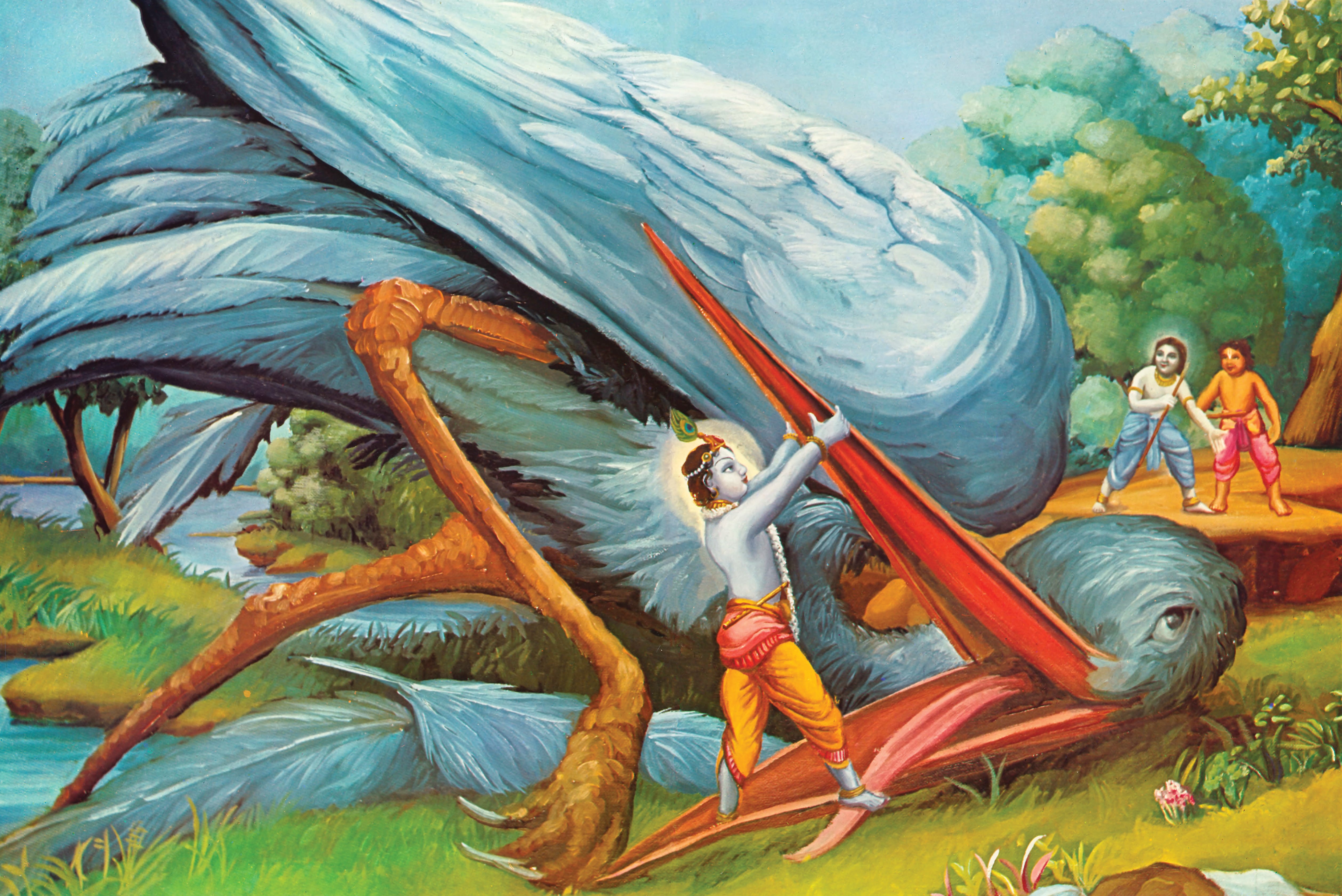
What does matter socially is sincerity of purpose, benevolence, and detachment from the impossible notion that everyone should be in concordance with us. Even more important is to understand that the commonality between all living entities is that Kṛṣṇa so intensely loves us despite our embodied dysfunction. After all, he faces many an awkward moment himself. He sets out with his brother for a typical day of cowherding and frolicking with his friends and is set upon by terrible monsters. Fortunately, he vanquishes these creatures with ease, much to the excitement of his friends. But it’s still pretty socially awkward, and it seems to happen a lot in his manifest pastimes as recorded in the sacred texts.
Śrīmad-Bhāgavatam offers us this gem (6.1.55):
eṣa prakṛti-saṅgena
puruṣasya viparyayaḥ
āsīt sa eva na cirād
īśa-saṅgād vilīyate“Since the living entity is associated with material nature, he is in an awkward position, but if in the human form of life he is taught how to associate with the Supreme Personality of Godhead or His devotee, this position can be overcome.”
We have the tendency to evaluate ourselves in comparison to others. If our association is with the personalities as described in the sacred texts, it’s simultaneously humbling and inspirational. This instinct for comparison then becomes a door to freedom and uproots the envy and anxiety we can feel in relation to others. We can never be Arjuna, but it feels great to have reverence for him. Come to think of it, the entire Bhagavad-gītā is contextualized by an awkward moment in the middle of a battlefield.
“Now I am confused about my duty and have lost all composure because of weakness. In this condition I am asking You to tell me clearly what is best for me. Now I am Your disciple, and a soul surrendered unto You. Please instruct me.”
It is liberating to understand that, like with Arjuna, Kṛṣṇa is constantly with us and is helping us according to our desire. Nothing lies outside that reality. And, however freaky we may be, just the mere attempt to turn his direction invokes powerful assistance. It’s extraordinary to even take up the smallest aspect of bhakti practice as gifted to the world by Śrī Caitanya Mahāprabhu. “Even stone can melt.”
Hare Kṛṣṇa Hare Kṛṣṇa
Kṛṣṇa Kṛṣṇa Hare Hare
Hare Rāma Hare Rāma
Rāma Rāma Hare Hare

Suburban Mysticism is free, but if you feel inspired and want to return some love, consider helping Ekendra to care for cows, or share the article with others.